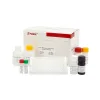
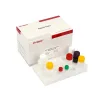
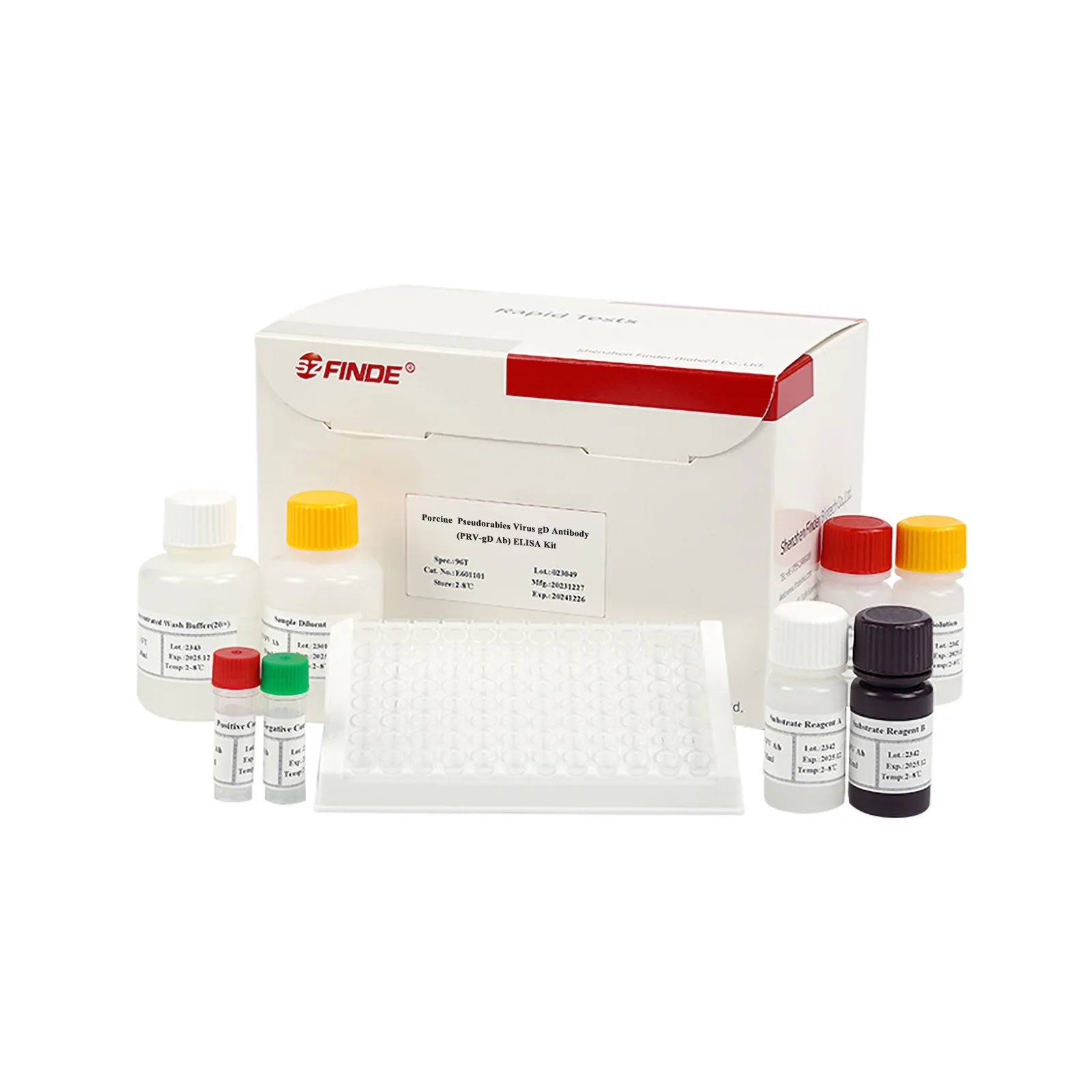
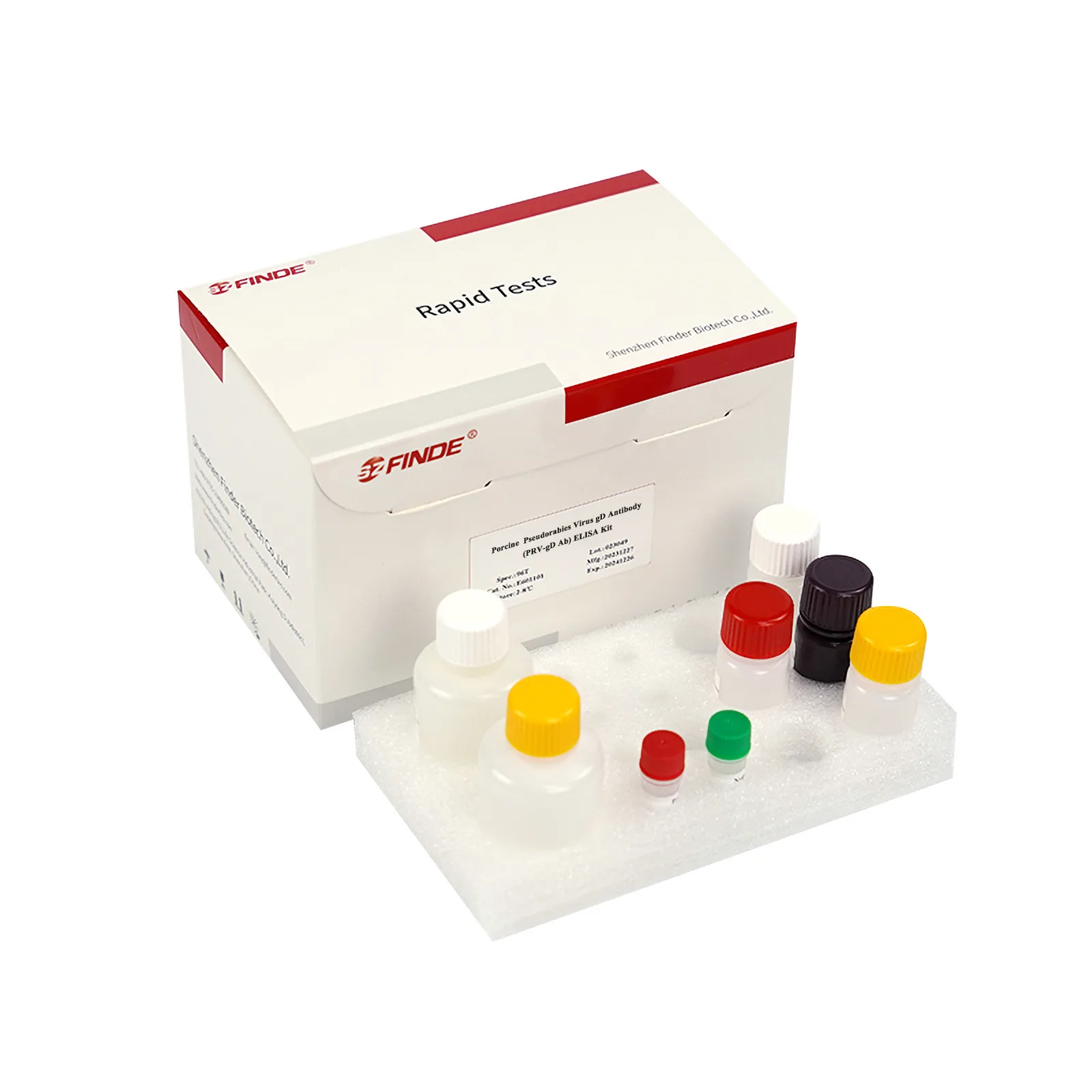
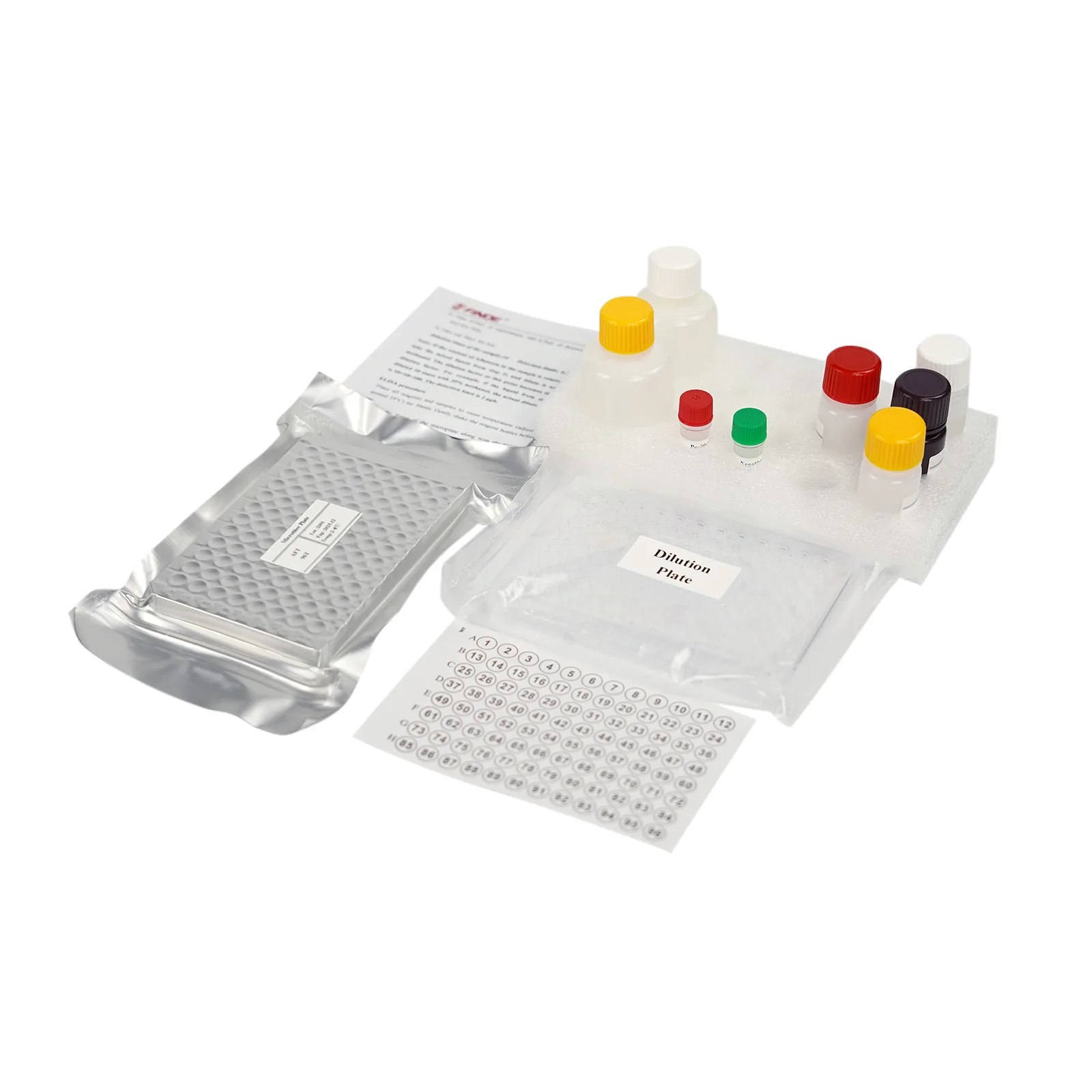
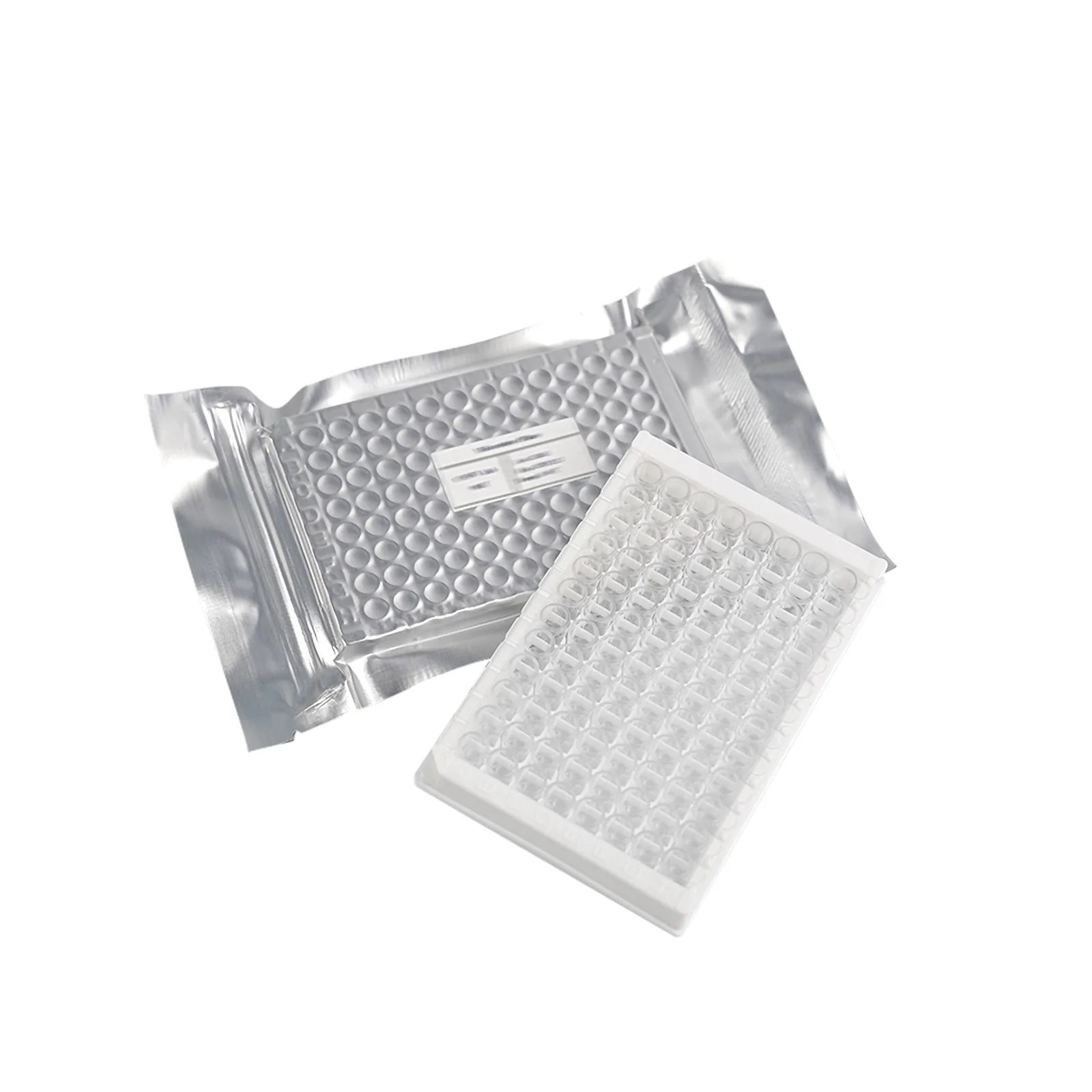
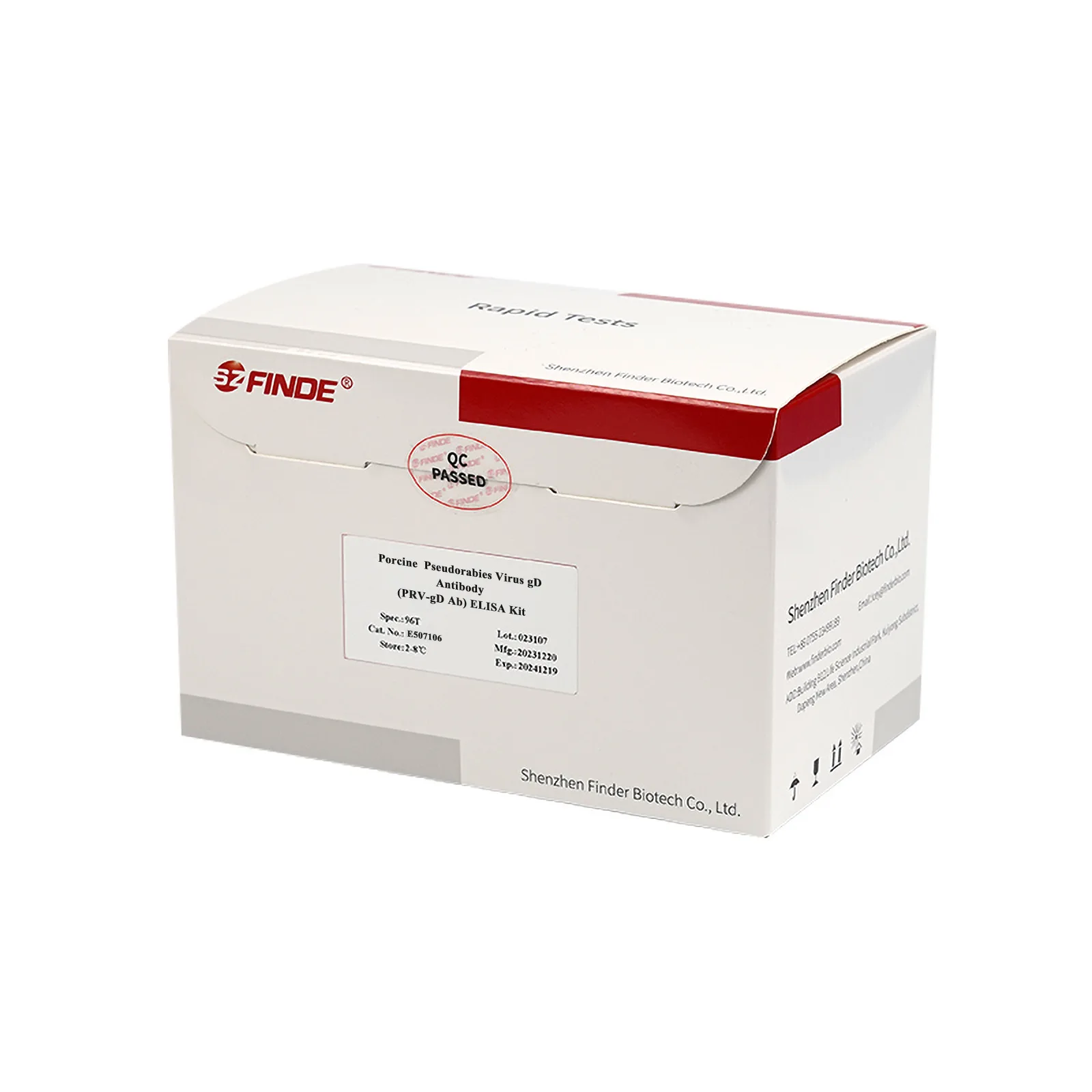
Veterinary diagnosis of Porcine Pseudorabies Virus gD Antibody ELISA Kit
Method
ELISA
Intended Use
Porcine Pseudorabies Virus gD Antibody ELISA Kit is used to detect gD antibodies in pig serum, assessing the infection or immunity status of pigs against pseudorabies virus.
Purpose The Porcine Pseudorabies Virus ELISA Kit is used to detect antibodies against the GD strain of the pseudorabies virus (PRV) in pigs. It provides a rapid and accurate method for identifying PRV infections in pigs, helping farmers and veterinarians implement effective disease control measures.
Porcine Pseudorabies Virus Overview
Pseudorabies virus (PRV) causes a fatal disease in pigs, leading to neurological symptoms like lethargy and lack of coordination. The disease spreads through direct contact between pigs. Severe cases result in high mortality, especially in young pigs. Early detection and control are crucial to prevent economic losses in the industry.
Kit Features
High Sensitivity The kit can detect low concentrations of PRV GD antibodies, ensuring early detection of infected pigs.
High Specificity It targets only PRV GD strain antibodies, avoiding cross-reactions with other viruses for accurate results.
Easy to Use The procedure is simple, making it easy to use in both laboratories and on-site environments.
Rapid Results The kit provides fast, reliable results, enabling timely interventions to prevent virus spread.
Strong Stability The kit maintains stability under normal storage conditions, ensuring reliable and accurate results.
Kit Advantages
Cost-Effective Ideal for large-scale herd testing, reducing costs and improving testing efficiency.
Portable Design The kit is compact and lightweight, perfect for on-site testing at farms and pigsties.
Wide Applicability It can be used with a variety of pig samples, including serum and tissues.
High Accuracy The kit provides accurate results, reducing the risk of misdiagnosis or missed infections.
Applications
Herd Monitoring It helps identify infected pigs early, reducing the spread of PRV within the herd.
Vaccine Evaluation The kit can evaluate the antibody levels post-vaccination, helping to optimize immunization strategies.
Clinical Diagnosis It helps confirm PRV infections, providing essential data for clinical treatment.
Research and Training The kit is useful for scientific research and veterinary education, supporting PRV-related studies.
Conclusion
The Porcine Pseudorabies Virus ELISA Kit is a highly efficient, sensitive, and user-friendly diagnostic tool. Its high sensitivity and specificity make it essential for managing PRV infections in pigs. By detecting infections early, it helps prevent the spread of the virus, protecting herd health and ensuring sustainable farming.